
Our Story
Long before Villa LuxL welcomed travelers from around the world, it was a working Santorini estate.
Behind these stone walls, generations of one family lived around a shared courtyard where everyday life revolved around the rhythm of the seasons. The largest house served as the family home, while the smaller buildings each had their own purpose—from the winery where grapes became wine, to the distillery where raki was produced after the harvest.
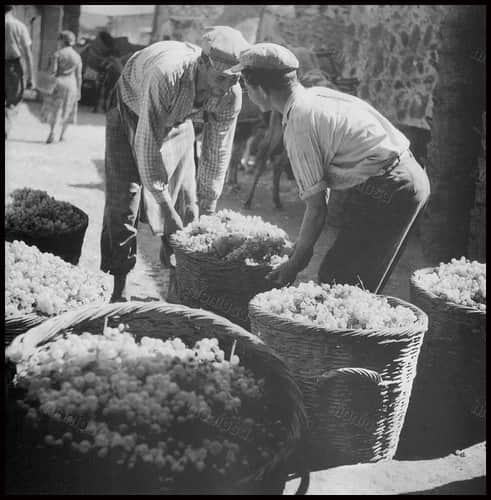
Each autumn, baskets filled with freshly picked Assyrtiko grapes arrived from the island's vineyards. The grapes were carried by hand through the courtyard before entering the canava, where wine was made using traditional methods that had been practiced on Santorini for centuries.
The Canava
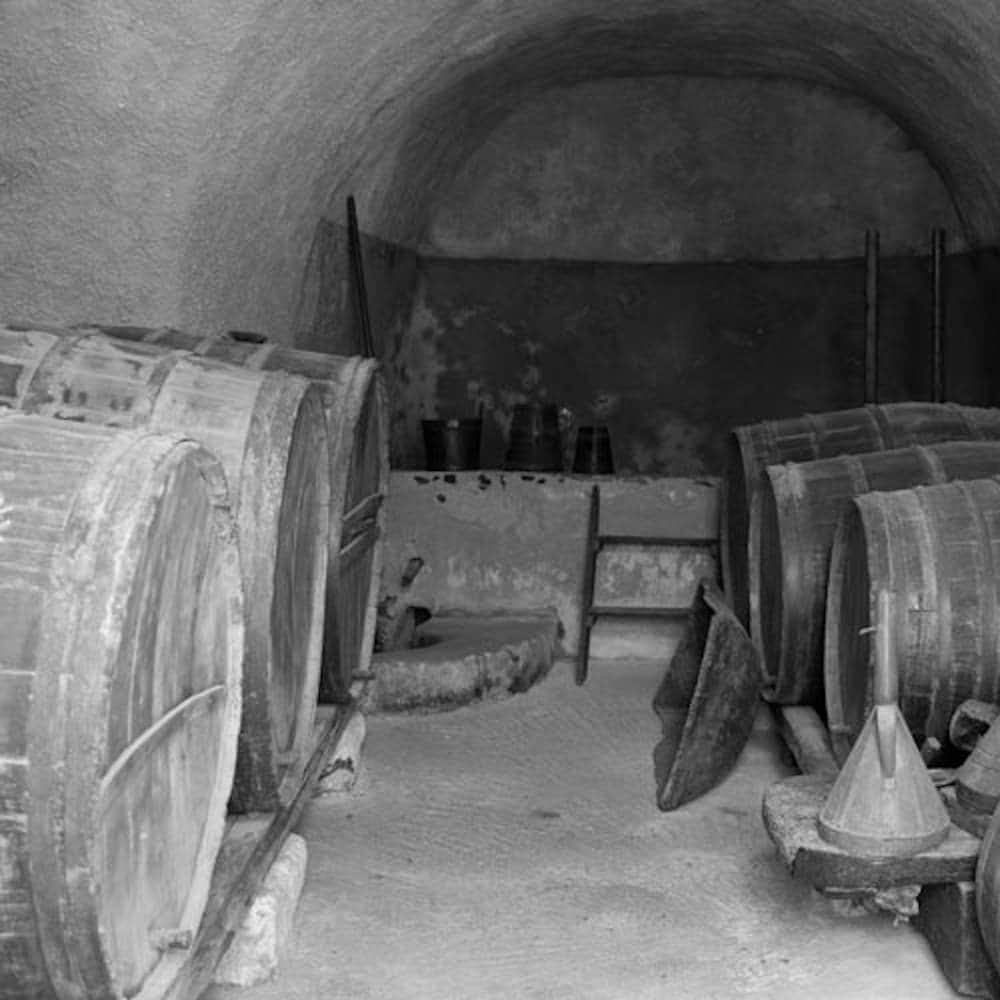
Among the people of the village, the winery was simply known as "Giannarelos' Canava."
For decades, this name identified the estate as one of the village's traditional wineries—a place where neighbours knew that harvest season meant long days, full baskets of grapes, and the unmistakable scent of fermenting wine.
Beside the winery stood the distillery, where the remaining grape skins were transformed into raki, ensuring that nothing from the harvest was wasted.
More Than a Winery
The estate was more than a place where wine was made.
It was a family home.
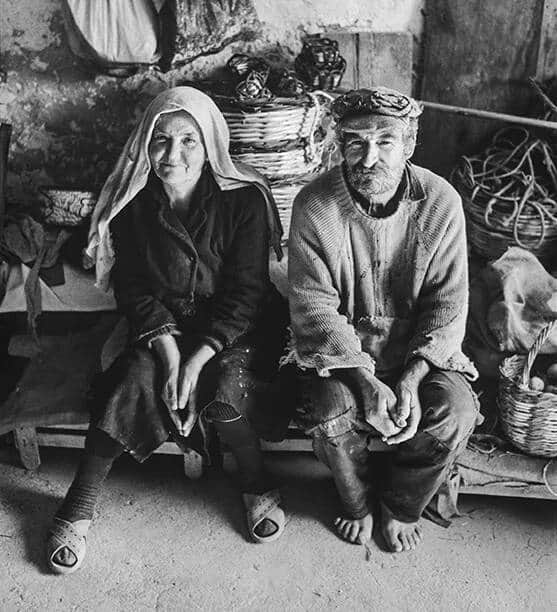
Generations lived within these walls, sharing meals, raising children, celebrating harvests, and working together through the changing seasons. Every room had a purpose, every building its role, and every corner of the courtyard was part of everyday life.
The restoration of Villa LuxL was guided by a simple idea: to preserve not only the architecture, but also the spirit of a place that had been lived in for generations.
A New Chapter
Today, the estate has entered a new chapter.
The winery no longer produces wine, and the courtyard now welcomes travelers instead of the annual grape harvest.Daily life here has changed, but the story of the estate has not been forgotten.
By sharing its history, we hope guests gain a deeper appreciation not only for where they are staying, but also for the generations of people who once called this place home.
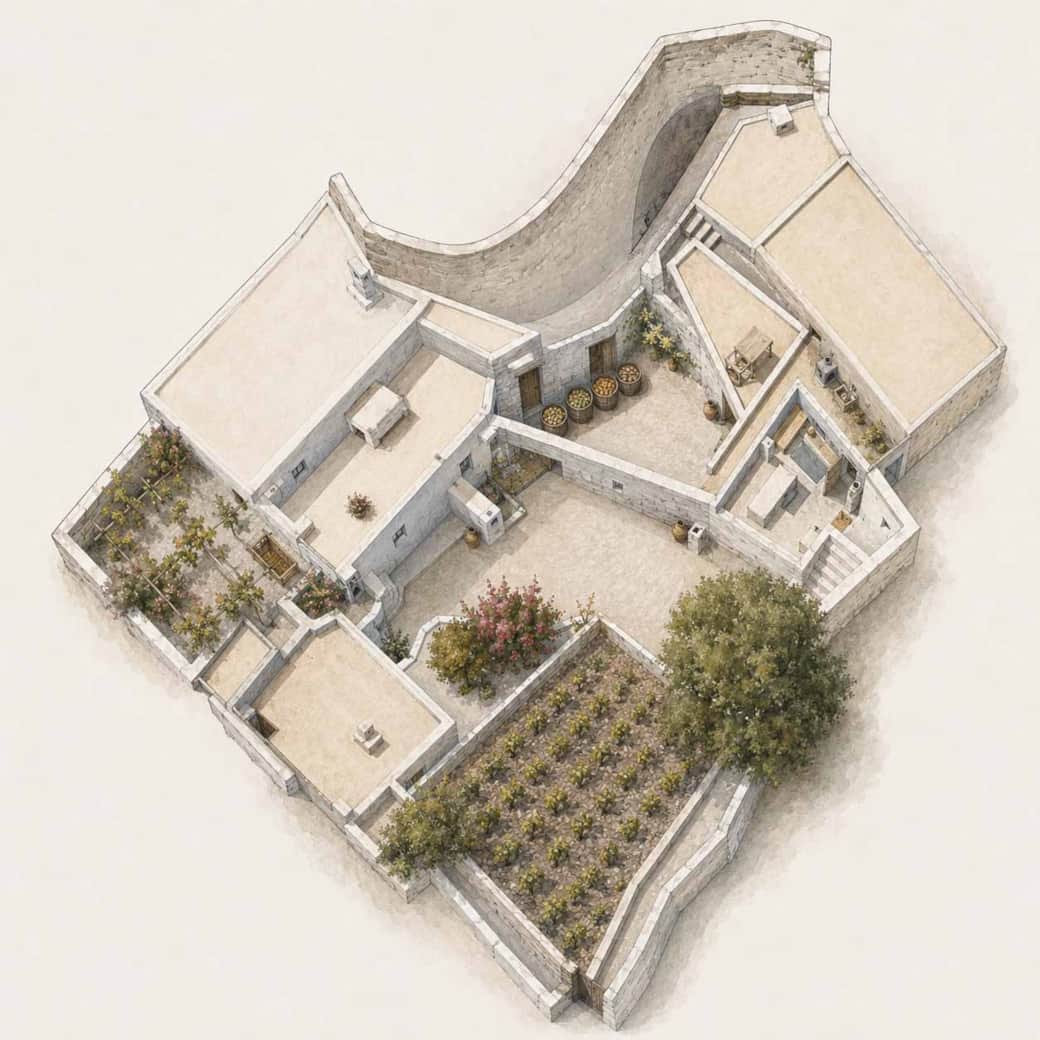
Artist's reconstruction of Villa LuxL during its years as a working winery and family estate.
The buildings have changed with time. Their story continues.